Search This Blog

Sunday, 2 November 2014

What's in a name?

The BBC is talking about the cultural practice of changing names on marriage here.
Sarah

This is not the whole story.

Although it touches on themes of identity, in concentrating on women "giving up" their identity on marriage (not so long ago, I would have been Mrs N. J. Halton and that would be the end of it. Being Mrs S. Halton in my own right would, shockingly, imply separation or even divorce) it seems to ignore the fact that many people have different identities through their lives and even their days. Women are lucky enough to be able to assign different names to their different identities. Take me as a case in point - my parents gave me my name (for my grandmother, who was named for her grandmother - but that's another blogpost all of its own!) and frequently refer to me by the name they gave me; I married before I felt I had really made a mark on the world and so took my husband's name - I swapped an 8-letter name no-one could spell for a 6-letter name no-one can spell. In fact, it's not his name either - the name comes from my father-in-law's stepfather and so belongs to none of us by blood. I am Mrs Halton for primary schools and tradespeople; Dr Halton for professional purposes and secondary schools (oddly, it does change the way they think about you, but that's more about the non-gender specific title Dr than the maiden / married name divide); I am Maiden Name to school friends. I am, I suppose, also Mum to the children and Sissy to my siblings and these names are no more or less part of my identity than my surname.
Mrs Sarah Halton

The history of names used in the article is enlightening but does not show whole picture - Dr Coulombeau has believed history and legal documents written by men. Research in the last 10 years on early medieval female agency shows that male researchers in the 1940s and 50s saw what they wanted to see, that women were subsumed into their husbands' legal identity at marriage. In fact women had far more identity and power than earlier historians were able to perceive, particularly prior to 1050; they were asking the wrong questions. They were also applying the feudal model to an earlier period. Dr Coulombeau is right about feudality seeming to use women merely as adjuncts to men, but it is notable that this flexed depending on the social position of the woman - an heiress would use her maiden name to identify her husband's right to her lands and on occasions, men would take their wives' names to completely tie down their claim to her birth family's lands and honours. It is also important to ask how women created their own identities and how they saw themselves.
Dr Sarah Halton

Names are, and have always been, a way of identifying people by tying them into a place in society and often geography. Early surnames for both men and women made reference to where they came from, how they looked or acted, or what their trade was. We are all familiar with the surnames Cooper, Weaver, Thatcher, Fletcher, Brewer and so on. Names ending in 'son' are self-explanitory, it's just a shame that the UK has never adopted the Icelandic custom of giving daughters the suffix 'dottir'. Surnames like Red, Brown, White and Black often refer to physical characteristics (hair colour) to differentiate people of the same given name within a settlement. Rulers have a long and glorious history of cognomina to identify them - William the Conqueror was also William the Bastard; Ragnar Loðbrók was also known as Ragnar Hairy-Breeches (although he may be apocryphal); Charles the Bald and even Æthelræd Unræd (no-one ever said cognomina had to be flattering!). Women also took these names, even after marriage, to identify them within local society. Ælfgifu of Northampton (c. 990 - aft. 1040), the first wife of Cnut the Great, ceded her position in England to his second wife, Emma of Normandy (the widow of Æthelræd the Unready).

Mrs N. J. Halton

In maintaining that women lost and still lose their identity in changing their name on marriage, Sophie Colombeau misses or ignores important points about the nature of dower and dowry; a widow retained her right to one third of her deceased husband's land and goods, and often the dower granted by her parents on marriage. The dower was frequently passed down to daughters of the marriage after the death of the wife / widow, making it land closely identified with the maternal line and giving women and identity based on their mother. Victorian families on the up loved nothing better than to use maiden names as second or third given names for their children, making the line easy to see in family trees and passing parts of both parents' identities to their children.

Different cultures deal with married names in different ways. In Icelandic culture, a name is a name and is irrevocably connected to an individual regardless of marital status. The name at birth is most normally conferred based on the father's given name, so Halldóra the daughter of Jóhann is Halldóra Jóhannsdóttir; her brother is Jóhannsson. Some children are given a matronymic, but this is rarer.

In the USA, I much like the idea of appending the new married name to the end of the full name, to allow a woman a composite name that reflects all of her identity. Thus, Jacqueline Lee Bouvier (Lee being her own mother's maiden name) became Jacqueline Bouvier Kennedy in common usage when she married John F. Kennedy. On her second marriage, she became Jackie Kennedy Onassis. It can mean stacking up names to an insane degree if many marriages are undertaken, but it allows one to construct a public identity that reflects the true history of one's identity, and raises the question of why we do not afford men the same opportunity to reflect their heritage and development as an individual. Arguably, it is a way of wearing one's heart on one's sleeve and that is perhaps why it has not really taken off in the UK - because we prefer to keep all our different identities separate.

Spanish-speaking countries see women keeping their own legal name (usually a hybrid of their parents' names) but being referred to socially as "Senõra de [husband's name]". Their children then take a hybrid of their surnames. In Spain, the hybrid tends to be Father's Name Mother's Name; in Portugal and Brazil, it tends to be the other way around. The same is true in France.

The keeping of a patronymic (for that is what a maiden name really is) on marriage in the modern world is often a question of how much of mark the individual woman feels she has made on society at the time of her marriage. The average age of first marriage for women rises. The ONS reports that in 2012, the mean age of first marriage for women was 34 years. This is almost ten years older than it was estimated to be in 1846 and that change is partly responsible for women choosing to keep their names. Dr Coulombeau is now on the faculty at Cardiff University, lecturing on romantic literature with a background in doctoral studies on personal naming at identity formation in the late 18th century within the study of English literature; of course she would not have a longer view on naming traditions (she would do well to read Dr Cordelia Beattie on the subject). Equally expectedly, of course she will keep her name on marriage, as she mentions in her article. She has an established professional identity to protect and nurture. There is one minor misunderstanding, though - she mentions at the end of the article "sign[ing] my unchanged name in the register". She will do that whatever she chooses to do with her name on marriage, as her name at marriage will be Coulombeau.

Of course, in the UK, changing one's name by usage is easy. You just start using another name, provided there is no intent to deceive. If you really want to go by the book, putting a small advert in the local paper will achieve this. Your documents will retain your legal name, but you can call yourself anything you like!

Tuesday, 19 August 2014

Brian Blessed - The Wider Tree

If I have one complaint about WDYTYA, it's that they concentrate very narrowly on the direct pedigree of their subject, and cherry-pick the stories that will make good television, so they never let you see the wider tree they have discovered, even in one single family line. This is understandable, given their infotainment remit as the programme must have something for everyone in its hour - some laughter, some tears; a little joy and tragedy; a soupcon of middle-class scandal (fraud, illegitimacy, bankruptcy, drunkenness - rarely anything truly horrific) and some kind of connection that the subject can be moved to tears by. In some of the USA series, this has been managed by having the subject burst into tears and announce "Oh my god, I had a great-grandmother" but mostly, the UK series manages to balance its episodes.

However, in doing so they often skew the story, or leave glaring holes that leave the genealogist thinking "really?". I had a moment like this watching Brian Blessed's episode when I realised they were basing the family tree on Jabez Blessed's parents, Barnabas and Elizabeth, only having 4 children over a 21 year marriage. Were they really married 7 years before the eldest child was born? Additionally, those watching the screen closely could see that the children were baptised with middle names (many of them Atkinson, their mother's maiden name) to which no reference was ever made - but which, combined with their father's name of Barnabas should make them stick out like a sore thumb.

So, I spent a happy couple of hours this weekend poking around the BB family tree, and found that the story the BBC told was correct, but suffered from omissions which changed the whole flavour of the narrative.

Barnabas Blessed and Elizabeth Atkinson were married in 1801 at St Pancras Old Church, but Martha was not their eldest child. Their children were in fact:

  • William Curven Blessed, 1803 - 1841
  • George Wilkinson Blessed, 1804 - 1846
  • Martha Atkinson Blessed, 1808 - 1822
  • Elizabeth Grace Blessed, 1810 - 1812
  • Barnabas Charles Atkinson Blessed, 1814 - 1889
  • Jabez Blessed, 1817 - 1890
  • Elizabeth Blessed, 1820 - 1822

It is entirely possible there was also another child in 1806 who was stillborn or miscarried, and possibly one more between Jabez and Elizabeth - an Isaac Blessett was buried at Portsea aged 5 months in November 1819, but it is not clear if he is of this family, and Portsmouth records are hard to get at easily, unless you are in Winchester.

This makes the picture of the family's move to Portsmouth very different - when Barnabas and Elizabeth went to Hampshire in about 1813 (Elizabeth Grace was buried in London), what happened to William and George? It seems most likely that they were apprenticed to London bookbinders (that was their later profession) and stayed in capital. Only Martha, who was admitted to the workhouse in 1822 as an 'idiot' went with them. Although the BBC fudged it and suggested she had learning difficulties, let us be clear: "idiot" in the early 19th century was a medical diagnosis, meaning the least intellectually capable of all, with a mental age of less than 3. They could not possibly have left her behind; and there was no place for her but the workhouse following her parents' deaths.

This rather changes the tenor of the story. When, by December 1822, Charles and Jabez were the only surviving Blessed children in the workhouse, they were in fact in the same part of London as their two older brothers. George Blessed married Ann Leage in 1824 and William Blessed married Isabella Storey in 1825 and they set about raising families. Why, then, did their younger brothers stay within the horrors of the workhouse? In 1825, Charles was apprenticed to a cordwainer and so was settled with board, lodging and a trade and they need not house him; and when Jabez ran away, which the broadcast made much of, it seems likely to me that he tried living with one of his brothers and they simply couldn't manage to feed both themselves and him. George Blessed died a pauper in 1846, so money was not plentiful. This, presumably, is how the two younger brothers stayed in touch despite their separation in the workhouse.

Jabez, as we know, was apprenticed onto a Newcastle coal ship that plied its trade up and down the East Coast of England, in about 1829 when he was 11. It is no huge surprise, then, that he married Ellen Hobson from Melton (a small village on the Humber, just outside Kingston upon Hull) in 1840, when she was just 17. Their first two children, Harriet and Elizabeth, were born in Melton, possibly because Jabez was still working on the boats as the 1841 census shows Ellen under her maiden name, living with her parents at Green Gate, Malton . Between 1843 and 1847 he moved to Brigg in Lincolnshire to be a general dealer / shop keeper / glass and china trader, with Ellen's youngest brother Thomas, and established the family there. There he stayed until his death in 1890, despite going spectacularly bankrupt in 1859.

The other thing the episode did not touch upon was why Brian's more immediate ancestors ended up in Yorkshire, if they started out in London two centuries ago. His great-great-grandmother being from Melton is an initial link, but I think it was more to do with the railways than familial affection. Brian's great-grandfather, George Jabez Blessed, worked on the railways for a period in the 1870s and left Brigg to go south west (just a little) to Rotherham then on to Mexborough. His great-great-uncle Jabez Allen Blessed also worked on the railways in Guiseley. It seems most likely that they followed the jobs.

Barnabas, of course, was not the first member of the family and he did not spring, fully-formed, onto the human stage. A very little digging reveals that his father, William Blessed, was born in about 1746 in London and considered himself a gentleman, according to the Sun Fire Insurance records. He lived in St Matthew's Parish, Bethnal Green, for most of his adult life, where he was both a cheesemonger on Brick Lane and a King's Agent (officer of the law). In 1775, he married Martha Baxter and they set about raising their family in Bethnal Green and later Shacklewell. In 1796 he apprenticed his son Barnabas to a carpenter and in 1802 was peripheral to a trial at the Old Bailey, when three youths were jailed and whipped for stealing from his daughter Mary, who was a haberdasher at 123 Brick Lane. Barnabas was by no means an only child, having two older sisters, Mary and Martha; two older brothers, both named William, both of whom died in infancy; a younger sister, Sarah; and a final younger brother, also William, who also did not see his first birthday. Barnabas and the youngest William were, for some reason, baptised in Wisbech in Cambridgeshire.

One of the fun things about this family is following the given names through; clearly Barnabas and Elizabeth were making reference to earlier members of the family tree when they used Curven and Wilkinson as middle names for their children. Elizabeth's maiden name was also used and, given the name under which she was buried (Elizabeth Rush Allen Blessed), it is possible that the tradition came from her side of the tree. However, Jabez was also clearly a name with some family significance, as it pops up repeatedly further down the tree, surviving into the 20th century. What that significance might be is still a mystery. "Allen" also floats quietly down the tree, from Elizabeth Atkinson's 3rd given name via a grandson, and a great-grandson, to her great-great-grandson, Brian's younger brother.

Of course, WDYTYA only has one hour to fill and has to choose carefully what to follow up for maximum televisual impact. The extra information I've offered you here is just for fun, to winkle out what more there might be, otherwise the programmes would be hours long; but it seems a shame that so much had to be missed.

Thursday, 14 August 2014

Who Do You Think You Are - Brian Blessed

It's great to see WDYTYA back on our screens, to give a bit of focus to the otherwise lazy, free-flow period of the summer holidays. I will confess, I was looking forward to the episode on Brian Blessed's family because he is always value for money, and tonight's broadcast did not disappoint.

Catch it here on iplayer, if you missed it!

In many ways, the success or failure of any episode of WDYTYA depends entirely not on how interesting the family tree uncovered is, but the personality of the chosen celebrity. Many of them accept at face value what they are told and find it a deeply emotional but not intellectually stimulating experience. There are always some unexpected participants who turn out to be natural historians, always asking the next question and seeking the explanation, the justification, the broader family experience that gives the whole picture; but these are relatively few.

This week, in Brian Blessed, I think the BBC may have struck gold, and found the perfect participant. Brian's persona (and voice!) are larger than life at the best of times, but he got so far inside his family history, talked about the whole family experience, made it into a coherent narrative and then narrated it so well that it felt more real and visceral than any other episode I've seen. In truth, he could make a Tesco receipt sound visceral when read aloud, but he brought something special to this episode of WDYTYA. He truly connected with his ancestors, sitting quietly in the churchyard in Portsmouth where he felt they were at peace after a short, hard, life, and he could feel close to and at peace with them too. The moment when he imagined the marriage ceremony between Barnabus Blessed and Elizabeth Atkinson in 1801 at St Pancras Old Church and intoned the well-know phrase "Barnabus Blessed, do you take Elizabeth for your wife?" was truly affecting; it brought the whole family into sharp relief.

The details of the family too, were well explained and threw up some interesting wider information for the casual historian. Barnabus Blessed was a bookbinder just off the Strand in London, at Bull Inn Court, with his own shop (rented), a wife, a child and a well-heeled clientele. Brian made them seem a real, happy family and hoped for the best for them when they removed to Portsmouth by 1814, following the booming bookbinding trade that the Navy made use of. Sadly, the boom ended and both Elizabeth and Barnabus had died as paupers by November 1822, when their orphaned children (Martha, 14, Barnabus Charles, 8, Jabez, 6 and Elizabeth, 2) were promptly sent back to London to claim Poor Relief in their "home" parish of St Martin in the Fields, even though only Martha had been born there. Sent to the workhouse, the two girls died within weeks, possibly of the same illness that took their father and Barnabus Charles and Jabez were split up.

Little more focus was given to Barnabus Charles Blessed from here on, who was apprenticed to a shoemaker and went on to apparently live a largely blameless and successful but quiet life. However, Jabez Blessed was clearly the personality spark that has been passed down to his great-great-grandson Brian. Jabez dragged himself out of the workhouse (by running away on at least one occasion), and worked on a Newcastle maritime vessel for a period. In 1840 he married Ellen Hobson in Kingston-upon-Hull and by 1851 had established himself as a seller of china and glass in Brigg in Lincolnshire working with his brother-in-law, Thomas Hobson. Jabez and Ellen eventually had 13 children. When he was widowed, Jabez married again in London, from the house of his brother Barnabus Charles, and eventually died in 1890 aged 73. All his 13 children lived to adulthood ( quite unusual for the 19th century) and it was his 6th son, George Jabez Blessed, who continued the line that lead to Brian.

Despite the sadness of some of the tales exposed this evening, the overpowering sense was one of hope that a human being could better themselves - that life could be made to go right, by sheer force of will. Although really, that is the triumph of hope over experience, for one precious hour this evening, Brian Blessed and his booming delivery made the world a more cheerful place with the hope of better things to come.

Monday, 11 August 2014

Family History in the Holidays

I don't know about you, but I find that by the third week of the summer holidays "Wow! I can play with all my toys" and "No school! Hurrah!" has rapidly become "what can I eat now, Mum?" and "where are we going today?". This gets dull and expensive very quickly, so I've put together some quick history-based ideas you can drop into the holidays here and there to stop you and any smaller people in your care going completely mad, or square-eyed from too many cartoons! You may or may not learn anything, but you will hopefully feel you've passed the time productively.

Firstly, I'd like to suggest that you look at my Children's Summer Holiday Project. Fill in the forms to collect information about yourself, your parents, grandparents, great-grandparents, aunts, uncles and cousins. There's a list of suggested questions to ask of people and space for photographs. By the end of a wet afternoon, you could have a complete family history project to show off!

Secondly, talk to people. Ask grandparents and older neighbours and friends what they did during their summer holidays. Everyone loves to hear stories of "when your mother cycled into a rosebush" or "the day Daddy accidentally went out with his slippers on". Hear tales of when the whole family used to go to Rhyll by train, every year, in the 1930s. This is oral history at it's finest, so collect it in your head while it's there.

Thirdly, look at where you are. Where do you live? When was your house built? In what style and of what kind of material? What was there before? This can encompass walks around town, trips to the library to look at modern maps and local history books, a happy hour on the internet looking at old maps online or old photographs. Settlements must have water of some kind, so is there a river bank you can walk along? It's likely to take you through the oldest parts of your town or village.

Look at where you are on holiday. A change is as good as a rest, as they say, and most people choose to holiday somewhere quite different from where they live, if they are able to. How does your destination differ from your home town? Are building materials different? What's the geography like? What are, or were, the local industries? This kind of comparison can be done between almost any two settlements, even neighbouring villages as long as there is some kind of geographical feature standing between them - a hill, a valley, a watercourse, a railway line, the remnants of a religious house - anything that conceptually separates the two areas for the inhabitants.

Watch Horrible Histories til your eyes go square. It's funny and the songs are very well observed. Altogether now, "William, William, Henry, Stephen..."

Hold Theme Days. This sounds like a step too far, but it can be great fun. For Roman Day, we made togas out of sheets, tried a little bit of Latin ("Caecilius est in horto"), ate Roman food (fruit & yoghurt for breakfast; sourdough, cheese, tomatoes & olives for lunch; quails egg salad, meat and vegetables, fruit & cheese for dinner) and marched around the garden shouting "Sinister! Dexter!" as we went. Hold Gladiatorial Games in the afternoon, but try to be the Lion not the Criminal! Gather or plant lavender and rosemary for your own medicinal herb garden and a sweet-smelling house.

For Viking / Icelandic Day, hold sword fights, try some weaving, eat fish and pickled things, draw long boats, make shields, wear blankets with big brooches or safety pins. Read some of the Sagas if you want real literature and Noggin The Nog if you don't (or watch it. All children should know their televisual heritage too)! The possibilities are endless. There are sources on the internet for history-themed puzzles, word searches, colouring-in and more, all aimed at different ages.

For the Medieval Period this is your chance to really dress up. Can you persuade your sons into doublet and hose? Probably not, but cardboard-box armour might work. Joust on hobby horses. Rescue princesses from dragons, or perhaps the other way around. Practice courtly behaviour!

Lastly, try a Treasure Trail! These lovely treasure hunts fill at least an afternoon and are a great value day out. They often encourage you to look at your local area in a different way.

Even if you only try one of these things, you'll have filled a bit of time and hopefully found that history isn't just about kings, dates and classrooms. Or, you could ignore all this and just chuck them into the garden. I intend to do that, too. Enjoy your summer!

Friday, 2 May 2014

One woman, one vote

Or, political activism through the prism of genealogy.
Annie Kenney and Christabel Pankhurst
A few weeks ago, I received my polling card for the Election of Members of the European Parliament for the South East Region, as the A5 piece of cardboard grandly states. I pinned it to the noticeboard, stuck the date in the diary and thought no more about it. It was the Easter holidays here, all the children were off school and time to work was limited. I'd been filling my day with little bits of silly historical novels, in between refereeing disagreements, throwing tweenage boys off the computer and into the garden, and providing an endless stream of snacks.

One of the books I took a quick trot through was the lovely Miss Rivers and Miss Bridges by Geraldine Symons (to see if it was appropriate for a bright 9 year old; the answer is yes, but the historical aspects might well be beyond their awareness), about two thirteen year old girls in 1911 (ish) who decide to join the agitation for Votes for Women. They adopt the pseudonyms Miss Rivers and Miss Bridges and conduct a brief campaign of civil disobedience with the expected consequences. In many ways, the book says a lot more about the flights of fancy to which teenage girls are prone rather than anything profound about the campaign for women's suffrage, but it led me back to my polling card.

Whatever I may feel about the European Union (personally, it seems not that different to the British Empire to me, we're just not in charge any more), I shall vote on 22 May because I can. When my maternal grandmother was born in 1910, women had no democratic voice, although she was born into a politically-aware family. She, her mother and her five sisters waited until the Equal Franchise Act of 1928 for vote to be extended to all women of 21 and over. It took a little under a century for women to be granted the vote, the first petition in favour of it being presented by Mary Smith shortly after the Representation of the People Act 1832, (2 & 3 Will. IV c.45) which defined voters as "male persons" (and still only extended the vote to about 5% of the population).

Political activism and social change can be hard to see in individual censuses. Trends may be discerned by comparing census records a decade apart, but the census is not in itself a political vehicle or statement - except in the important case of 1911.

The fight for universal suffrage was much more bloody and unpleasant than pretty Mrs Banks in Mary Poppins, flashing her garter to the outrage of the housemaid, would have us believe. Civil agitation in the form of shop-window smashing and stone-throwing soon led to horrifying acts of pointless vandalism (like Mary Raleigh Richardson's slashing of the Rokeby Venus in the National Gallery in 1914) and even a (possibly accidental) public suicide. Post boxes were set alight, golf courses dug up, arson committed and even small bombs planted. The aim was to show the Government that government was impossible without the will of the governed, half of whom were excluded from the process. In 1913, the Prisoners' Temporary Discharge of Ill Health Act (known as the Cat and Mouse Act) allowed suffragette prisoners on hunger strike to be released on grounds of ill-health and returned to jail for the same offence once they had recovered.

Part of the process of reaching universal suffrage was the 1911 census. Civil disobedience was at its height and avoiding the census was something individual women could do. Emily Wilding Davison, who died in 1913 trying to pin flags to the bridle of the King's horse at Epsom Derby, famously spent census night (2 April 1911) hiding in the broom cupboard in the crypt of  the Houses of Parliament. She was eventually recorded twice, being both discovered by a cleaner and betrayed by her landlady, who recorded her as 'at home' even though she wasn't, but she managed to upset the record nonetheless.

There is no tally of the number of women missing from the 1911 census due to suffragism. Some stayed out all night so as not to be home, like the women who camped on Putney Heath (pretty chilly in early April, I should think); their later summons to the South Western Police Court, London to answer charges of driving on the turf (not evading the census) was reported in the Cheltenham Chronicle on 15 April. Louisa Burnham refused to fill in any details regarding herself, her sister and a maidservant and commented pithily "No Vote, No Census. If I am intelligent enough to fill in this Census Form, I can surely make an X on a Ballot Paper". Other women struck through the record filled in by their husbands, only for their husbands to reinstate it and observe that they did not approve, like poor Eleanora Maund. It is noticeable that her husband was more than 20 years her senior and may have been rather old-fashioned in his attitudes!

The women summonsed for their behaviour on Putney Heath made a statement to the court that "the offence would not occur again, as before the next census the suffragettes would have attained their object". Actually, it was almost time for the 1931 census before all adult women received the vote although women over 30 who met property qualifications received the vote in 1918. My grandmother, her three surviving sisters and their mother would first have voted in the General Election of October 1931, when she was just 21; and in the late 1940s she moved with her young family to Castle Camps in Cambridgeshire. Near the school was a house occupied by a stern single lady in her fifties, popularly rumoured among local children to be a witch. She was Mary Raleigh Richardson.

Saturday, 29 March 2014

The Marriage (Same Sex Couples) Act 2013

Today, being 29 March 2014, marks the first time that same-sex couples can marry legally in the UK.

Although the press are evenly split between making much of how touching and full of love the weddings are, and bewailing that this is the End Of Days and we will all be struck by lightning (or floods - see comments by Councillor David Silvester of Henley on Thames about the true biblical nature of the 2013-4 weather and accompanying flooding here at the BBC), I think it is interesting to consider this great step in a purely genealogical way for a moment.

In their fight for the right to make their union publicly recognised and supported and to be given the same support by their surrounding community that heterosexual married couples can access, same-sex couples are also seeking a change in the way future generations are able to see them. The couples that married at a few minutes past midnight today - Peter McGraith and David Cabreza, John Coffey and Bernardo Marti, and Andrew Wale and Neil Allard are the most widely known - now have a formal record of a previously unrecognised union that future generations can search for, locate, gain a copy of and recognise. What a significant movement on from a century ago, when such unions were illegal and many families had a distant uncle with a "housemate", or a spinster cousin who shared a home with "her good friend" "for companionship". These relationships could not be recognised within the public record at the time and the knowledge of them is often lost as future generations go forward, particularly if these unions were childless (as they often must have been in the past). Although civil partnerships have been available to same-sex couples since 2005 (via the Civil Partnership Act 2004), which gave many of the same protections to same-sex couples as marriage did to mixed-sex couples, the civil partnership index (which is kept in the same way as the indices to births, marriages and deaths, by registrars and public record offices) is not easy to consult and people tend not to think of checking it as part of the process of researching family history. Additionally, in a world where statistics suggest that more than 50% of children may be born outside marriage by 2016, anything which leaves a mark in the public record is to be welcomed by future generations of family historians. The only "problem" with a birth outside marriage is that the child's birth certificate cannot lead to the parents' marriage certificate, which would give parents' ages and grandfathers' names. A link in the chain of evidence is lost and must be sought elsewhere.

Family history, evidential integrity and statistical accuracy aside, though, today's change in the law can only be welcomed from a human point of view. More people who love each other are now able to make a public commitment to each other which enshrines their rights and responsibilities simply, within law and society, by virtue of one single piece of paper which also fixes them within the line of their family (through reporting father's names), friends (often witnesses) and locality (where they choose to marry). Future generations can celebrate too. What's not to like?

And as an aside, I've been looking at the idea of the End of Days. Some groups maintain that the chaos of the end of the world will be followed by a period of deep peace and harmony as all races come to know goodness and each other. So we're not there yet!

Thursday, 20 March 2014

Vintage wedding fashion

One of the lovely things about genealogy is that you can stretch the definition of family history almost infinitely, to encompass all sorts of little trips down other routes to pursue things that interest you. So today, in a link up with the lovely Celfunte Costumes and Couture, I'm thinking about changing wedding fashion. Famously, white weddings were popularised by the marriage of Queen Victoria to Prince Albert in 1840, when she wore a white dress and veil, trimmed with orange blossom.
Painting by Franz Xaver Winterhalter, 1847
Original is in the Royal Collection
Victoria herself described the dress as 'an imitation of an old design'; it was, in fact, something of a political piece - the silk satin was woven in Spitalfields and the lace flounces and veil were from Honiton and Beer, in Devon. The train was 18 feet long and became a fashion statement in its own right! This was a wedding dress designed to show support for British cottage industry and became a talking point for years. The orange blossom was to signify fertility (met with horror by some sections of Victorian society) and led to a craze for orange-blossom weddings, where society newspapers were quick to record that real orange blossoms had been used. Poorer brides with aspirations had to make do with wax replicas.

Wedding fashion can be a funny thing; is it led by Royal weddings, or do they follow the prevailing fashion and magnify it for others to see better?

When Princess Mary of Teck married the future George V in 1893, her dress was very different from Victoria's. The Times described the occasion thus:

"It is to the strains of the Bridal march from Lohengrin that Princess Mary enters. the observed of all observers in the most literal sense. With downcast eyes and a flush on her cheeks she looks exquisitely pretty. Her dress of silver and white brocade with its ingeniously clustered shamrocks, roses and thistles is at once simple and elegant. There is no train, or at all events, none that hampers the bride's movement, while a plain court bodice shows off her finely-moulded figure to perfection. The bridal veil of fine old Honiton point is caught back off the face, and trails and clusters of orange blossoms, together with the inevitable bouquet of white flowers carried in her hand, complete the salient points of the bride's appearance." Observation of The Times, 8 July 1893


(c) The Royal Collection / Historic Royal Palaces
Now compare this with a middle-class wedding from 1901 - the dress silhouette is very similar, although higher in the neck, and the bride carries white flowers with similar blossoms in her hair.
The group photograph was a sea of enormous hats!
This is, I think, how many of us picture historic wedding clothing - stern-faced gentlemen and serious-but-happy brides. A wedding was an opportunity to make a statement about how prosperous and populous a family was, to show them to their best advantage while celebrating the happy union of one family to another and the creation of a new family unit. Of course, this did not always require huge dresses and massive group photographs:
but the huge hat was clearly still popular even in the late 1930s! At least the happy couple were allowed to smile by then. Celfunte Costumes and Couture is currently hosting a retrospective on Vintage Wedding fashion here - pop along and have a look!

Monday, 3 March 2014

Marriage, that blessed arrangement...

In the film The Princess Bride, Peter Cook famously described marriage as 'that blessed arrangement! That dream within a dream!' Leaving the Impressive Clergyman's amusing speech impediment aside for a moment, is this really what marriage is? I think it is worth discussing.

Let's return to The Princess Bride for a minute. Buttercup and Westley are united by the bonds of True Love, but when Westley is apparently murdered by the Dread Pirate Roberts (who famously leaves no survivors), Buttercup's dreams are crushed. We are told that 'for days, she neither slept, nor ate'. Then, she gets pragmatic. When the loathsome Prince Humperdink makes her an offer of marriage, she reasons that financial security and assured social position are a tolerable trade-off for a union not based on love, and she accepts him.

In 2014, this seems like a horrifying idea. Marriage should be a meeting of true minds, a union of mutual love and support and growth, forging a path  together through life with mutual goals in mind. I remember a friend telling me (after another doomed love affair went west and I sobbed on her shoulder) that I "needed a co-pilot, not a passenger". All of this is true in this day and age, but it's a very new marriage paradigm and not one that would have been recognised even a century ago, necessarily. Some are even arguing that in expecting deep psychological insight in modern marriages, we are doomed to increasing marriage-failure1.

The world was a very different place in the past. When Jane Austen wrote Pride and Prejudice we were not meant to be horrified that Elizabeth Bennett ever considered marrying the truly appalling Mr Collins (and she rejects him out of hand before he offers anyway), but that Charlotte Lucas ever really considered not marrying him. Charlotte is 27 years old, unmarried, unprepossessing of appearance, not rich enough to marry well but too socially-advanced to marry a working man, and facing a lifetime as the unmarried daughter of her father's house, pitied, tolerated, the object of charity and without a family of her own. A clergyman with a veneer of respectability was the best kind of husband she could hope for, to secure her future social position and material comfort. Revolting though the thought of married life, with all the intimacy it implies, with Mr Collins may be, he is the best route out of her situation and she would be foolish to turn down his offer. Instead, she accepts him and encourages him to be in his garden as often as possible. There is a suggestion later in the book that they have at least one child, and we may hope that Charlotte was happy with the bargain she struck with herself.

Marriage has always been the life-point at which women are most useful (but also most dangerous) to their families. They are the social glue which bind families together. The unmarried daughter, in history, is in a precarious position - living under sufferance in her father's house and later her brothers', tolerated as a source of free childcare and domestic help, passed around between family members so no-one has to bear the cost of her too long. Contrast this with the position of the widow, however old or young and however long she was married - a widow is in a very strong position, most likely controlling at least a third of her late husband's estate and able to act independently for the first time in her life (at least until she is swept into marriage again). Widows were often viewed with suspicion as a source of uncontrolled female agency, which is why Chancery made such an excellent income from auctioning off rich widows and heiresses to the highest bidder for so many centuries. A daughter like Fanny Price's mother, in Mansfield Park, who "married, in the common phrase, to disoblige her family, and by fixing on a lieutenant of marines, without education, fortune, or connexions, did it very thoroughly" 2 brings a familial link that is difficult, embarrassing and impossible to wriggle out of.

Why was it impossible to wriggle out of? Because the marriage is public. Marriages are public because they need witnesses. In centuries past, this was to fix the event in public memory, so that further marriages could not be illegally undertaken. When marriages were regularised by Hardwicke's Marriage Act in 1753, requiring them to take place in a Church of England church or chapel, with the consent of parents for any parties under 21, the aim was to force marriage to become a fixed point within a social group and stem the rising tide of illegal, bigamous or unsanctioned marriages which could previously take place anywhere provided you could find a minister. Marriage is public not only so that other people know, but so that two families are forced to acknowledge the fact of it and each other, which makes it harder for either party to walk away. Witness as a key point in marriage stems from much older societies, where 30 years of public memory was enough to make a binding claim on land. Even now, a marriage in a locked room is not legally binding.

The number of marriages in the UK population is gradually falling over time, from about 80 marriages per 1,000 unmarried males in 1971 to 22 per 1,000 in 20113. Now that marriage is not seen as an essential pre-requisite for creating a stable family and bringing up children, fewer people see the need to marry; which means that those that do, do so because they really cannot bear not to. Logically, this also means that the level of divorces recorded is gradually falling as more marriages that might fail because they are forced unnaturally on the participants by an unforgiving society, are never undertaken. In our parents' and grandparents' generations, people "had to" get married and their first child was then "premature" (and alarming well-developed for a baby apparently 8 weeks early!). You never hear of such things today.

A century ago, as the First World War began, a huge number of women with young children were widowed. Although society allowed them a degree of freedom to work, needing them in factories while the men were fighting, for many the answer to feeding and clothing themselves and their children was to marry again, quickly. Marriage was a form of defence against poverty, although it did not always work like that as within 15 years the beginnings of the Great Depression coupled with more than one adult male in the house (the step-father and any grown sons of the first marriage) often meant someone had to leave. The massive changes in society since then mean that a woman alone with children does not need a husband to make her respectable or prevent her from starving.

Marriage is, according to the Book of Common Prayer 1662, "ordained for the mutual society, help and comfort that the one [party] ought to have of the other, both in prosperity and adversity". If "mutual society, help and comfort" has moved on from 'food, shelter and social position' to mean 'support and growth', that's not a bad thing. At the centre of both paradigms is the idea of a shared goal, although that goal may be shifting over time. Deep psychological insight may be a bit much to ask, though.


1 http://www.theguardian.com/science/2014/feb/13/self-discovery-marriage-psychologist-suffocation-model↩
2 Austen, Jane, Mansfield Park (J. M Dent & Co, London, 3rd edition, 1893) p.2 ↩
3 "Marriages in England and Wales (Provisional) 2011", Office of National Statistics 26 June 2013↩

Monday, 24 February 2014

Births, Marriages and Deaths - the importance of recognition

In the last fortnight, there has been an interesting programme on ITV based around the comings and goings at Westminster Register Office. It had something for everyone - laughter, tears, pretty weddings, quick-and-cheap weddings that turned out to be filled with emotion after all, civil partnerships, talking heads, The Royal Baby... the lot. It was quite nicely observed, but it raised some interesting issues.

Clearly, the fundamental basis of civil registration of hatches, matches and dispatches is control. It is always useful to literally know where the bodies are buried and people are easier to track and social and moral rules easier to enforce if people can be pinned down at important points in their lives. At the most basic level, the three key points of life are birth, marriage and death, so that's a good place to start. Civil registration, as introduced by Queen Victoria on 1 July 1837, took over where the Church of England left off and regularised the position regarding marriages so that non-Church of England marriages could be recognised as long as a registrar was present.

The Victorian Era was a period of expansion of both Empire and the State - at least in part because an Empire is easier to run with a proper bureaucracy. Information is power and the more information was nailed down, the more control the state had. If you are looking for information about your ancestors you are far more likely to find it in an area which has been part of an Empire and retained the structures thereof, than in an area which has been passed from nominal ruler to ruler over a long period; each new ruling body tends to try to start again, which leaves the records in a terrible mess. Even the USA, which has a terrible fear of federal government holding all the information, keeps good records at state and county level, if you know where to look.

So, recording births, deaths and marriages was initially a governmental construct, but it is actually much more than that. All societies seek to recognise important social points in the lives of their inhabitants, and these began as social constructs which government or the church then became involved in. The recording of birth allows planning for the correct size of population - but also recognises the arrival of a new, tiny, human being and the formation of a new set of relationships between that child and others. Even if they are the youngest of 11 children, the new child will have relationships entirely of his or her own with everyone else, starting with their parents. Baptisms (and their recording) allow the formation of a new relationship between the child, her family and the wider church community, and the new civil naming ceremonies allow the same without a religious aspect. Binding the new child to their family and wider community is one of the most important things a family can do, providing the scaffolding upon which a life will later be built.

And what of marriage? Registration both at church and in the civil record made the marriage public and bound people together in the eyes of society, although until comparatively recently it was possible to achieve a de facto divorce by both partners agreeing to part, moving to opposite ends of the country and claiming to be widowed. The problem with bigamy, in the eyes of many, was not technically being married to two people, but when one partner did not agree to the parting and was abandoned, often with children to care for. Let us not forget that although a marriage can be clandestine, it cannot be completely secret - notices must be given, licences sought or banns read, and the church or registrar's office cannot be closed during the ceremony - any one must be able to attend (and object, if they see fit!). Marriage is about the public recognition of the formation of a new family. Even Scottish irregular marriages were based on the principles of mutual consent before witnesses, and this was why marriage at Gretna Green was popular - just over the border into Scotland, no parental consent was required providing the two parties were over 16 (prior to 1929 the age was 12 for girls and 14 for boys) and a declaration that the couple considered themselves married was enough. It often fell to the blacksmith to be the witness, because he was easy to locate and identify!

And finally, death. This is perhaps the most important recognition of them all - the closing of a life, however long or short, and the acceptance that the life had value. Many societies have ancestor-veneration at their heart, for it is only in the retelling of lives and the remembrance of former family members that their lives are recognised and celebrated. In the Series 10 episode of Who Do You Think You Are starring the actor Nitin Ganatra, there was an affecting moment when he had cause to finally register the death of one of his mother's infant sisters, many many years after she died. There was a palpable sense that the act of registration brought the lost child back into the family and acknowledged her as one of them and part of the wider family story. Later, when he added his own and his children's names to the local records in the city of Mathura in India, extending the family line to 10 generations the power is again in the recognition of the familial connection.

So the registration of the important points in people's lives are not just about control - they are about the marking of a liminal moment, a turning point where a family stands on the cusp of something new. Possibly not quite what the government intended in 1836-7, but vital nonetheless.

Monday, 10 February 2014

The Rolling English Road

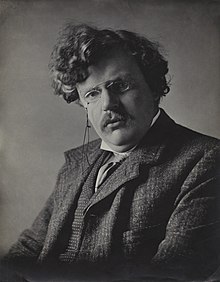
I referred to this poem in my previous post Genealogy Blogging, and on further consideration it struck me that it is a good metaphor for my approach to family history. I find it can't be taken in a linear fashion - you have to jump from place to place, following hunches and lunches and places of work, looking at the local rather than the national, making educated guesses as to motivations and obfuscations. Also, I like Chesterton as a poet, and this poem particularly. My father introduced me to it when I was about 11 or 12, and it was the first time I realised Victorian poets could be funny not starchy (although the poem was written in 1913, I suspect Chesterton considered himself Victorian). Chesterton himself, of course, may be considered a "local lad", dying at his home in Beaconsfield in 1936.

Gilbert Keith Chesterton, taken by E. H. Mills in 1909

Here, therefore, for your delight and delectation, is The Rolling English Road:

Before the Roman came to Rye or out to Severn strode,
The rolling English drunkard made the rolling English road.
A reeling road, a rolling road, that rambles round the shire,
And after him the parson ran, the sexton and the squire;
A merry road, a mazy road, and such as we did tread
The night we went to Birmingham by way of Beachy Head.

I knew no harm of Bonaparte and plenty of the Squire,
And for to fight the Frenchman I did not much desire;
But I did bash their baggonets because they came arrayed
To straighten out the crooked road an English drunkard made,
Where you and I went down the lane with ale-mugs in our hands,
The night we went to Glastonbury by way of Goodwin Sands.

His sins they were forgiven him; or why do flowers run
Behind him; and the hedges all strengthening in the sun?
The wild thing went from left to right and knew not which was which,
But the wild rose was above him when they found him in the ditch.
God pardon us, nor harden us; we did not see so clear
The night we went to Bannockburn by way of Brighton Pier.

My friends, we will not go again or ape an ancient rage,
Or stretch the folly of our youth to be the shame of age,
But walk with clearer eyes and ears this path that wandereth,
And see undrugged in evening light the decent inn of death;
For there is good news yet to hear and fine things to be seen,
Before we go to Paradise by way of Kensal Green. 

G. K. Chesterton

Thursday, 6 February 2014

On Serendipity

Serendipity is a funny thing. The concept of benign fate, of fortuitous happenstance, of life and experience combining to bring someone to a new understanding or discovery by chance, but based upon existing experience, is in many ways alien to the usual understanding of 'fate'. People are usually more familiar with the fatalistic Anglo-Saxon concept of 'wyrd', from the Old English verb weorþan, "to become" (an ancestor of the modern English 'weird'), which implies a malevolent fate ultimately out to get you.

Seredipity, though, is a friendly thing; the intercession of the universe in one's daily life in a pleasant way, enabling the making of connections and the increase in human understanding. The term was reported coined by Horace Walpole in 1754, in response to a Persian traditional tale set in Serendip (now Sri Lanka), where things were repeatedly discovered by accident as an adjunct to the tale.

Within family history, there is a tendency to seek a reason for everything. What led your great-great-grandparents to meet? Were they part of the same church congregation? Did they work together? Were their families living on the same street, or did one lodge with a cousin or family friend? Often, there are answers of this kind to be found, and this is why connections can be made by mapping the family in geographical terms as well as laying out timelines. Sometimes, though, we must accept that serendipity was at play.

This morning, I had a seredipitous moment. It was a rare quiet morning for me - no meetings, no phone calls, no urgent emails to send or pressing need to bury myself in the records of 18th century Devon and Cornwall (which may well have been drier than 21st century Devon and Cornwall). I rewarded myself with a sneaky coffee in town. Because the cafe was busy, I shared a table with a stranger. We got to talking about nothing in particular, and it became apparent that she was also interested in social history. Suddenly, for the price of a cup of coffee and an almond croissant, I have a new acquaintance who shares my interest in family history and might be interested in sharing information. This is the sort of meeting that public record will not necessarily show, but can change a family story. My parents met on a bus - but they turned out to be working for the same company; my grandparents met when my grandfather whistled at a pretty girl in the street - but she turned out to be lodging with his cousin. These meetings may well have happened eventually through other means, (after all, we are only ever six degrees of separation from anyone) but this morning serendipity gave it all a little nudge. Benign intervention of the Universe indeed.

Genealogy blogging

Genealogy and blogging do not naturally go together. Genealogy is, perforce, something one does alone, sharing the results of research or new sources, but a running-commentary would be long-winded, slow and, dare I say it, very dull indeed, even for other enthusiasts. Blogging is more immediate, more stream-of-consciousness, more of a way to provide a snapshot of something swift and exciting.

So how to marry the two together? Sometimes, when researching, something occurs which is instant and exciting and needs to be shared (within the confines of not spreading other people's family trees all over the internet without their permission). Mostly, though, the long slow trawl through tiny, tiny, pieces of information (which is what genealogy really is) and the gradual building of a picture leads to a sudden understanding of how some aspect of society has changed (or not!) over the last few centuries, as modelled by one or several families.

This blog is unlikely to lead anyone to finding lost millions, or suddenly inheriting a private island. It might, though, lead to an appreciation of how or why your family did what it did; what drove them, what formed their attitudes and aptitudes, what happened that led to "the night they went to Birmingham by way of Beachy Head" (The Rolling English Road, G.K. Chesterton).

Alternatively, I might just write about things that seem interesting to me.